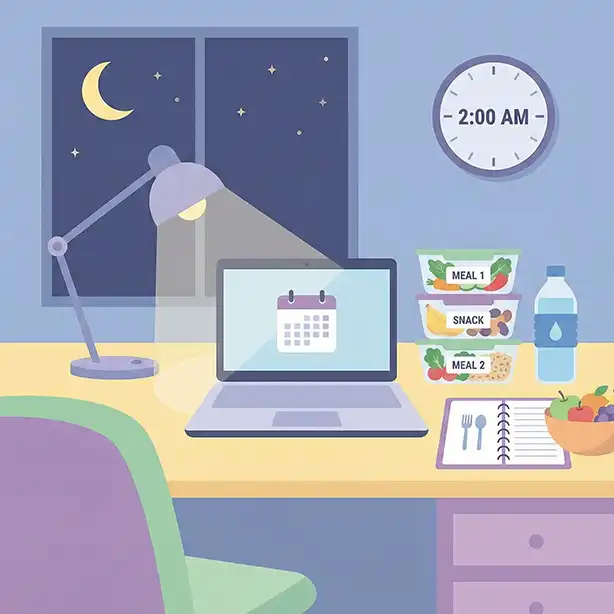
Working when the rest of the world is sleeping disrupts more than just your social life; it fundamentally confuses your biology. For many, meal planning for night shift remote workers is the difference between thriving in a career and suffering from constant burnout.
If you are staring at a screen at 3 AM craving sugar, you are not alone. The night shift throws your circadian rhythm off balance, affecting digestion and metabolism. However, with the right strategy, you can hack your diet to maintain high energy levels without the crash.
This guide explores actionable, realistic ways to handle nutrition when your office is your home and your “lunch break” is at midnight.
Why Meal Planning for Night Shift Remote Workers is Different
The primary challenge isn’t just what you eat, but when you eat. Your body is naturally primed to digest food during daylight hours.
When you eat heavy meals overnight, insulin sensitivity is lower, meaning your body is more likely to store that energy as fat rather than burn it efficiently. Meal planning for night shift remote workers requires a shift in mindset. You aren’t just planning meals; you are timing fuel for a biological engine that wants to be asleep.
Ignoring this often leads to “shift work disorder,” characterized by insomnia and excessive sleepiness. A structured meal plan helps anchor your internal clock, telling your body, “We are awake now, and this is okay.”
1. Structure Your “Day” of Eating
Consistency is the golden rule. Even though your schedule is inverted, your eating windows should remain predictable.
Don’t graze randomly throughout the night. Instead, structure your meals to mimic a traditional day.
- Wake-up meal (6:00 PM – 8:00 PM): This is your “breakfast.” Make it balanced with protein and complex carbs.
- Main meal (12:00 AM – 1:00 AM): This is your “lunch.” This should be your largest caloric intake during the shift.
- Snack (3:00 AM – 4:00 AM): Keep this light to avoid making you drowsy before the end of your shift.
- Recovery meal (7:00 AM – 8:00 AM): Your “dinner” before sleeping. Keep this light and carb-heavy to promote sleep.
2. Prioritize Protein and Hydration
One of the biggest mistakes in meal planning for night shift remote workers is relying on carbohydrates for quick energy. While a bagel gives you a boost at 11 PM, it will crash you by 2 AM.
Focus on protein. Protein promotes alertness. Grilled chicken, tofu, hard-boiled eggs, or Greek yogurt are excellent staples to prep in advance.
Additionally, hydration is critical. Air conditioning and heating in home offices can be dehydrating. Dehydration mimics hunger. Before you reach for a snack, drink a glass of water.
Pro Tip: Keep a 2-liter water bottle at your desk. It serves as a visual reminder to keep drinking throughout your shift.
3. The “Caffeine Cut-Off” Rule
Coffee is the lifeblood of the night shift, but it is a double-edged sword.
Consuming caffeine too late in your shift will ruin your daytime sleep. A successful strategy for meal planning for night shift remote workers must include a strict caffeine cutoff.
Stop drinking coffee or energy drinks at least 4-5 hours before your intended bedtime. If you finish work at 6 AM and want to sleep by 7 AM, your last coffee should be no later than 2 AM. Switch to herbal teas or cold water for the final leg of your shift.
4. Batch Cooking for Success
The last thing you want to do after an 8-hour shift is cook. This is where most remote workers fail; they order fast food because it’s easy.
Dedicate one day a week to batch cooking. Roasting a tray of vegetables and cooking a pot of quinoa or brown rice takes less than an hour but provides the base for days of meals.
Invest in glass containers. Having a “grab-and-go” meal in your own fridge removes the friction of decision-making when you are tired.
Recommended Batch-Cook Meals:
- Chicken and vegetable stir-fry
- Lentil soup (easy to digest overnight)
- Overnight oats (perfect for your “wake up” meal)
5. Light vs. Heavy Meals
Your digestion slows down at night. A heavy steak or a rich pasta dish at 2 AM sits in your stomach, leading to bloating and lethargy.
Effective meal planning for night shift remote workers prioritizes digestibility. Soups, salads with protein, and smoothies are easier on the system than heavy meats or fried foods.
If you crave something warm, opt for a vegetable-based stew rather than a burger. Your gut will thank you, and you will find it easier to focus on your tasks.
6. Smart Snacking Options
Snacking is inevitable. When the boredom hits or a task gets difficult, we reach for comfort food.
Replace high-sugar snacks with functional foods.
- Nuts and Seeds: Walnuts and almonds provide healthy fats that sustain brain function.
- Berries: Low in sugar but high in antioxidants.
- Dark Chocolate: A square of 70% dark chocolate can satisfy a craving without spiking your blood sugar.
Avoid vending-machine style snacks in your pantry. If you don’t buy them, you can’t eat them at 3 AM.
7. Connecting Diet with Sleep Quality
Your post-shift meal is just as important as your mid-shift meal. Eating a massive meal right before bed can cause acid reflux and keep your body temperature high, preventing deep sleep.
Your final meal should be small. Interestingly, some carbohydrates here are helpful as they can aid in the production of serotonin and melatonin. A small bowl of oatmeal or a piece of whole-grain toast is ideal.
According to the Sleep Foundation, certain foods like kiwi or tart cherry juice may actually improve sleep quality, making them great additions to your “dinner” routine.
Conclusion
Mastering meal planning for night shift remote workers is not about restriction; it is about synchronization. By aligning your food intake with your workflow and respecting your body’s need for lighter fuel overnight, you can protect your health and your career longevity.
Start small. Choose one strategy from this list—perhaps the caffeine cutoff or the batch cooking—and implement it this week. Your energy levels will tell you it’s working.
For more tips on setting up your workspace for overnight success, check out our guide on [Creating the Perfect Home Office Setup].
Why Humans Age But Plants Don’t? 5 Incredible Biological Secrets Revealed