
You went to bed at a reasonable hour. You got your “eight hours.” Yet, you woke up feeling like you barely slept at all. You’re groggy, irritable, and reaching for your third cup of coffee before 10 AM.
Sound familiar?
The problem might not be the quantity of your sleep, but the quality. And that quality is often destroyed by breaking a few simple, fundamental sleep hygiene rules.
Most people know the basics, like “don’t drink an espresso at 9 PM.” But the real culprits are often the habits we don’t even realize are sabotaging our rest. These are the 5 shocking sleep hygiene rules you are probably breaking every single day—and exactly how to fix them for good.
Medical Disclaimer: This article is for informational purposes. While these tips are widely recommended, I am not a medical professional. If you suffer from chronic insomnia or a potential sleep disorder, please consult with your doctor or a sleep specialist.
💤 First, What is Sleep Hygiene?
Let’s clear this up: “Sleep hygiene” has nothing to do with how clean your sheets are (though that helps!).
Think of it like dental hygiene. Brushing your teeth is a set of habits you do daily to ensure your dental health. Sleep hygiene is the exact same thing for your sleep—it’s the collection of habits, routines, and environmental factors that you can control to set yourself up for a great night’s sleep.
Breaking these rules is like eating candy all day and wondering why you have a cavity.
The 5 Shocking Sleep Hygiene Rules You’re Breaking
You might be following 90% of the advice out there, but breaking just one of these rules can be enough to disrupt your night.
1. You Hit the “Snooze” Button (The Sleep Inertia Trap)
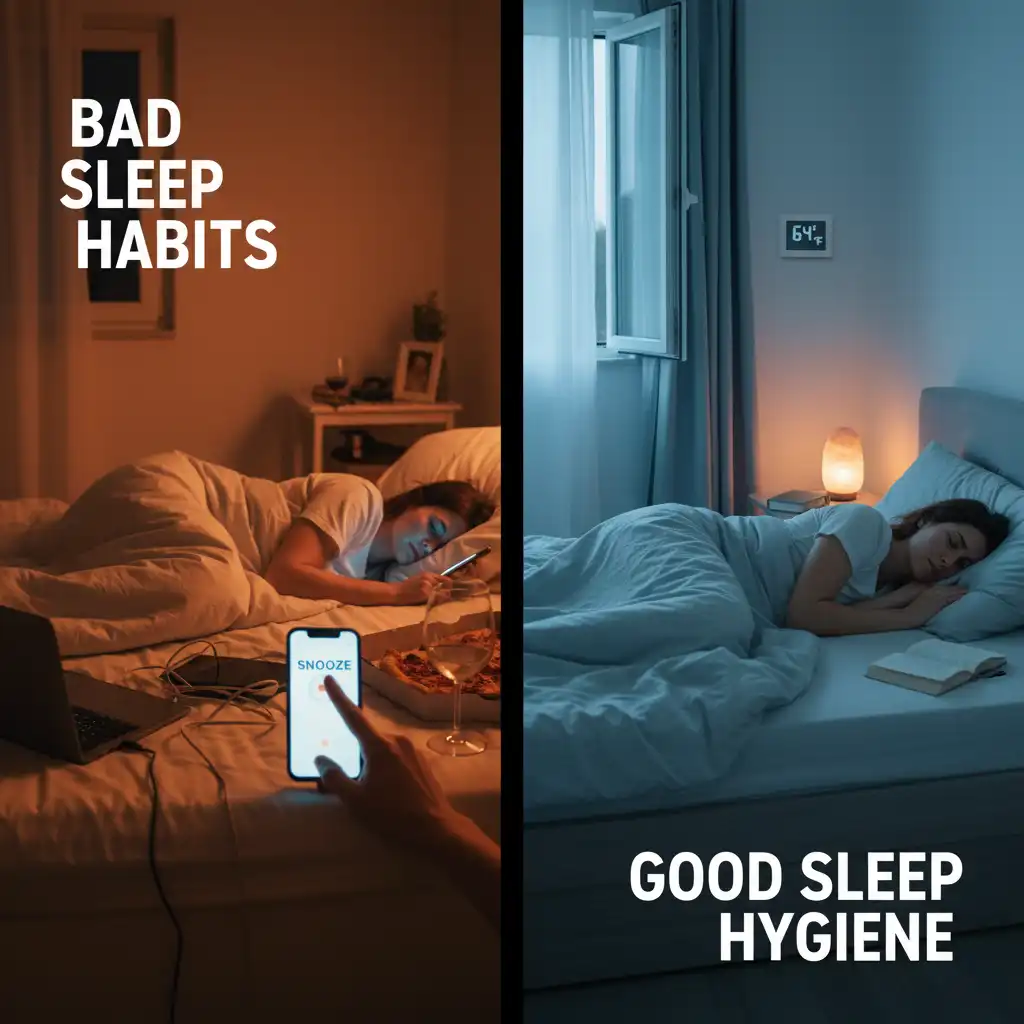
- The Problem: Your alarm goes off at 6:30 AM. You hit snooze. It goes off at 6:39. You hit snooze again. You do this for half an hour.
- Why It’s Breaking the Rule: You think you’re “easing into the day,” but you’re actually causing sleep inertia. That fragmented, low-quality “snooze sleep” isn’t restorative. When your first alarm goes off, your body is already starting the process of waking up. Hitting snooze tells it, “Just kidding, go back to sleep,” but it can’t enter a new, full sleep cycle. This leaves you in a groggy, “half-asleep” state that can last for hours.
- The Fix: This one is simple, but not easy. Set your alarm for the time you actually have to get up. Then, put your alarm (or phone) across the room. This forces you to physically get out of bed to turn it off, making you far less likely to crawl back in.
2. Your Sleep Schedule Has “Social Jetlag”
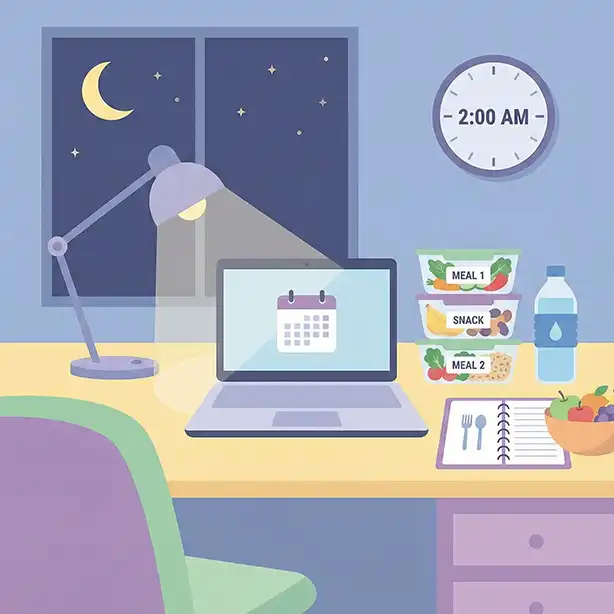
- The Problem: You’re a model of consistency from Monday to Friday, waking up at 6 AM. But on Friday and Saturday, you stay up until 2 AM and sleep until 11 AM.
- Why It’s Breaking the Rule: This is one of the most important sleep hygiene rules of all: maintain a consistent wake time. When you dramatically shift your schedule, you give your body “social jetlag.” You’re essentially forcing your internal clock (circadian rhythm) into a new time zone every single weekend. Then you’re shocked when Monday morning feels awful.
- The Fix: Try to wake up within one hour of your normal wake time, even on weekends. Yes, even on weekends. If you wake up at 6 AM during the week, get up by 7 or 7:30 AM on Saturday. You can still take a short nap later if you need to, but locking in your wake time is the anchor for your entire sleep cycle.
3. You Treat Your Bed Like Your Living Room
- The Problem: You work from your bed. You watch Netflix in bed. You scroll through TikTok and answer emails in bed.
- Why It’s Breaking the Rule: You are breaking the golden rule of stimulus control. Your brain is a powerful association machine. It needs to associate “bed” with “sleep.” When you do all your waking, stressful, or entertaining activities there, your brain gets confused. It sees the bed as a place for work, anxiety, and entertainment. Then, when you try to sleep, your brain just fires up, “Oh, this is where we watch TV!”
- The Fix: Your bed is for sleep and sex only. That’s it. Do all your work, reading, and watching from a chair or couch. If you get into bed and can’t fall asleep after 20 minutes, get out. Go to another dimly-lit room and read a physical book until you feel sleepy, then return to bed.
4. You Have a “Nightcap” to Wind Down
- The Problem: You have a glass of wine or a beer an hour before bed to “relax you” and “help you fall asleep.”
- Why It’s Breaking the Rule: Alcohol is a primary-level saboteur of sleep. While it is a sedative and can help you fall asleep faster, it destroys your sleep quality. As your body metabolizes the alcohol, it causes a “rebound effect” in the second half of the night. This severely fragments your REM sleep (the restorative, dream stage), causing you to wake up at 3 AM with your heart racing.
- The Fix: Stop all alcohol 2-3 hours before your intended bedtime. Instead of a nightcap, try a drink that actually supports sleep. (We cover a great one in our article: The “Sleep Cocktail” Hack: 3 Ingredients for the Best Sleep.
5. Your Bedroom is Too Warm
- The Problem: You have a dark, quiet room, but you have the heat cranked up and you’re under a thick comforter. You like to be “cozy.”
- Why It’s Breaking the Rule: A “cozy” room is often a “too warm” room. To initiate and maintain deep sleep, your body’s core temperature needs to drop by a couple of degrees. If your room is too hot, you’re actively fighting this natural process.
- The Fix: Turn down the thermostat. The ideal temperature for sleep is surprisingly cool, between 60-67°F (15-19°C). This is one of the most critical environmental sleep hygiene rules, and authoritative sources like the CDC (Centers for Disease Control and Prevention) back this up. It’s better to have a cool room and use blankets you can kick off than to be in a warm room you can’t escape.
A Simple Checklist for Better Sleep Hygiene
Don’t get overwhelmed. Just pick one of these rules to work on this week.
- Set one wake-up time and stick to it (even on weekends).
- Get out of bed if you’re not asleep in 20 minutes.
- Put your phone across the room tonight.
- Swap your nightcap for a non-alcoholic alternative.
- Turn down your thermostat by two degrees.
These small changes can make a massive difference. Building good sleep hygiene is a skill, and it’s the foundation for feeling your best.
If you’ve fixed your habits and still feel like stress is keeping you up, your issue might be more internal. You can learn about natural supplements that help with stress in our guide: Ashwagandha vs. L-Theanine: Which Natural Supplement is Best for Your Stress?








2 Responses